
Insights
03OCT 2025
Debunking Common Myths About Rear Door Heat Exchangers
Rear Door Heat Exchangers (RDHx) are changing the way data centres manage heat, yet a few misconceptions still hold some operators back from embracing the technology.
As workloads become denser and GPU-heavy environments increase, traditional air-based systems are reaching their limits. RDHx technology provides a practical answer, improving efficiency, stability, and performance. But to understand its value, it’s worth clearing up a few common myths.
Myth 2 – RDHx Is Only for New Builds
Many assume rear door systems are suited only to new data centre projects. That’s far from the case.
Retrofits are increasingly common, allowing operators to phase cooling upgrades without interrupting operations. At QIS, we work with clients to plan installations during live environments, coordinating with on-site teams to maintain uptime throughout the process.
Myth 3 – They Can’t Handle High-Density Racks
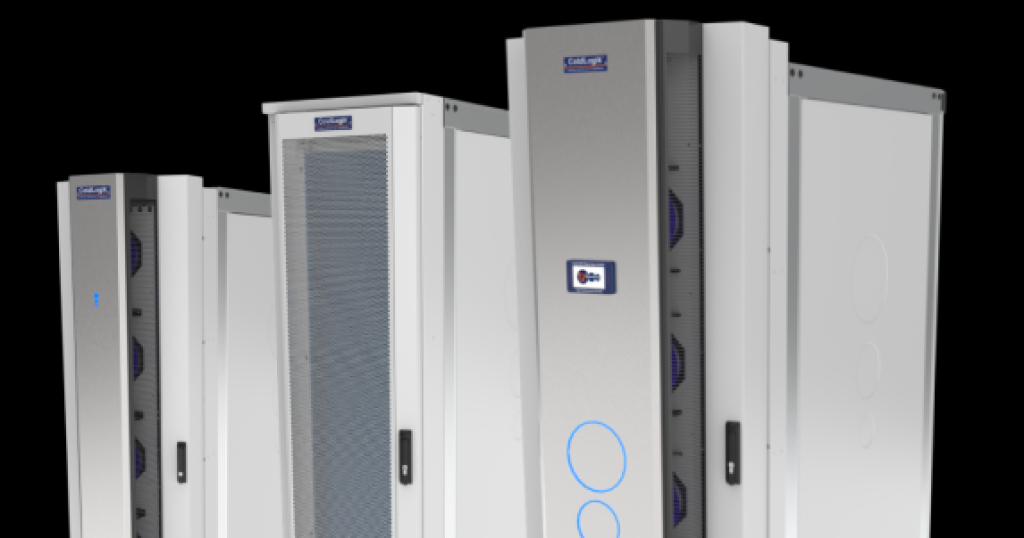
Modern RDHx technology is engineered for performance at scale. USystems’ ColdLogik range, for example, manages heat loads of over 200kW per rack, making it suitable for AI, HPC, and other high-density workloads.
By capturing and removing heat at rack level, RDHx systems reduce energy consumption, improve PUE, and create a more stable environment for critical compute.
Our team at QIS helps clients integrate USystems’ RDHx technology into both new and existing facilities. From design support to installation, we ensure every system is delivered safely, efficiently, and with your future growth in mind.
Myth 4 – Maintenance Is Difficult
Another misunderstanding is that liquid-based systems are more complex to service than traditional air-cooled racks. In practice, RDHx maintenance routines are transparent and well-documented, and many operators report reduced maintenance frequency thanks to improved temperature control.
The system’s modular design also allows for straightforward component access and servicing, making long-term management simple.
Whether you’re planning a new build or upgrading current capacity, we can help deliver a solution that supports your technical and operational goals.
Why Rear Door Cooling Matters
As AI and HPC workloads continue to rise, cooling will remain a critical consideration. RDHx technology is helping data centres meet growing density demands without overhauling entire cooling systems or increasing energy consumption.
It’s not just an upgrade, it’s a way to align performance with sustainability and operational resilience.
Interested in Working Together?
QIS partners with USystems to help clients adopt forward-thinking, practical solutions for the future of digital infrastructure.
Whether you’re designing a new facility or planning a retrofit, we can help you integrate RDHx systems that match your operational goals and technical requirements.
Get in touch to learn more about how QIS can support your next project.

Leave a Comment